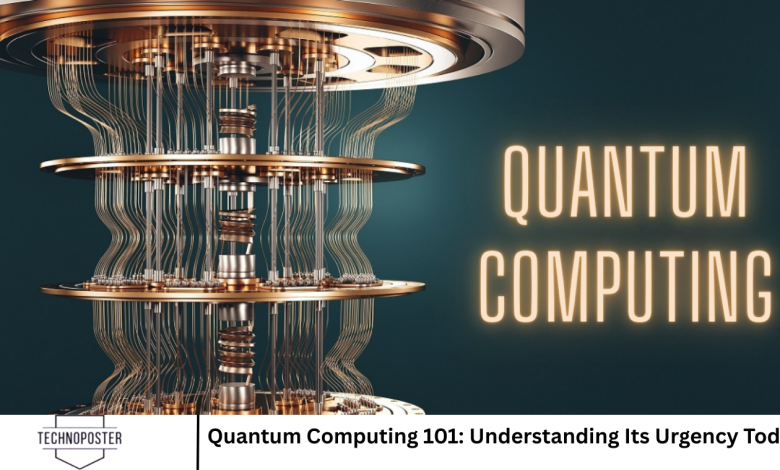
Quantum computing is no longer just a concept confined to academic labs or science fiction. It is rapidly emerging as a transformative technology poised to revolutionize industries, from cryptography to drug discovery, finance, and artificial intelligence. But what exactly is quantum computing? Why is it considered so urgent and important today? And how does it differ from classical computing?
This article will guide you through the fundamentals of quantum computing, explain its significance in today’s world, and explore why understanding this technology is essential—even if you’re a beginner.
What Is Quantum Computing?
At its core, quantum computing is a new type of computation that harnesses the unique principles of quantum mechanics—the physics governing the behavior of particles at atomic and subatomic scales. Unlike classical computers, which use bits to represent data as either 0 or 1, quantum computers use quantum bits, or qubits.
Qubits: The Building Blocks
- Superposition: Qubits can exist in a combination of 0 and 1 states simultaneously, thanks to a property called superposition. This means quantum computers can process a vast number of possibilities all at once.
- Entanglement: Qubits can become entangled, meaning the state of one qubit is directly linked to another, no matter how far apart they are. This phenomenon allows quantum computers to coordinate information in ways classical computers cannot.
Together, superposition and entanglement allow quantum computers to explore and analyze complex problems exponentially faster than classical systems.
How Does Quantum Computing Differ from Classical Computing?
Classical computers process information sequentially or in parallel using transistors that are either on or off, representing binary 0s and 1s. Quantum computers, on the other hand, operate in a probabilistic state, leveraging the power of quantum physics to perform many calculations simultaneously.
While classical computers are excellent for everyday tasks, their capacity to solve certain problems is limited by time and complexity. Quantum computers can potentially solve complex problems that would take classical computers thousands of years—such as factoring large numbers, optimizing vast systems, or simulating molecular interactions—much more efficiently.
Why Does Quantum Computing Matter Now?
You might wonder why quantum computing is gaining so much attention right now. Several factors contribute to its urgency:
- Technological Maturity: Over the past decade, advances in hardware, error correction, and algorithms have pushed quantum computing from theory toward practical applications.
- Cybersecurity Threats: Quantum computers could break current encryption methods (like RSA), which secure much of today’s digital communications and transactions. Preparing for this shift is critical for data security.
- Economic Competition: Governments and corporations worldwide are investing heavily in quantum technology, recognizing its potential to provide strategic advantages in fields like finance, pharmaceuticals, and materials science.
- New Scientific Frontiers: Quantum simulations can unlock understanding of chemical processes and materials at a level unattainable by classical computers, accelerating innovation.
Key Areas Impacted by Quantum Computing
Cryptography and Cybersecurity
Quantum computers can potentially break widely-used cryptographic protocols, which rely on the difficulty of factoring large numbers. This threatens current security standards but also drives the development of quantum-resistant encryption, often called post-quantum cryptography.
Drug Discovery and Chemistry
Simulating molecules and chemical reactions at quantum levels can help discover new drugs and materials faster and more accurately than ever before.
Optimization Problems
From supply chain logistics to financial portfolio management, many industries face complex optimization challenges that quantum algorithms can solve more efficiently.
Artificial Intelligence and Machine Learning
Quantum computing can accelerate machine learning models by processing vast datasets more quickly, improving pattern recognition, and enabling new AI capabilities.
Current Challenges in Quantum Computing
Despite its promise, quantum computing faces significant hurdles:
- Error Rates and Decoherence: Qubits are extremely sensitive to environmental noise, which causes errors and loss of information—a challenge known as decoherence.
- Scalability: Building quantum computers with enough stable qubits to solve practical problems remains difficult.
- Algorithm Development: Many quantum algorithms are still in early stages, requiring new methods to unlock full potential.
- Cost and Accessibility: Quantum hardware is expensive and requires specialized conditions, limiting access mostly to research institutions and large corporations.
How to Prepare for a Quantum Future
Quantum computing is expected to become an integral part of technology landscapes within the next decade or two. Here’s how individuals and organizations can prepare:
- Education: Learning quantum basics can help professionals understand potential impacts and opportunities.
- Investing in Research: Companies and governments should fund quantum research and collaborations.
- Cybersecurity Upgrades: Preparing infrastructure for post-quantum cryptography ensures data protection.
- Developing Quantum Skills: Training quantum software developers, engineers, and specialists will build the workforce needed.
Quantum Computing Today: Real-World Examples
While large-scale quantum computing is still emerging, there are tangible examples:
- Companies are using quantum simulators to experiment with molecules and materials.
- Financial institutions explore quantum algorithms for portfolio optimization.
- Governments launch quantum research centers and initiatives to advance national capabilities.
These efforts indicate that the quantum revolution is already underway.
Frequently Asked Questions
What exactly is a qubit?
A qubit is the quantum equivalent of a classical bit, but unlike a bit that’s either 0 or 1, a qubit can be in a state of 0, 1, or both simultaneously thanks to superposition.
How soon will quantum computers replace classical ones?
Quantum computers will not replace classical computers entirely. They will complement classical systems by solving specific complex problems more efficiently, likely becoming more practical over the next 10–20 years.
Can quantum computers break all encryption?
Currently used encryption like RSA could be vulnerable to quantum attacks in the future. However, new quantum-resistant encryption methods are being developed to secure communications against this threat.
Is quantum computing only for scientists and researchers?
While initially focused on academia and industry, quantum computing knowledge is becoming relevant across sectors. Businesses, developers, and policymakers are increasingly engaging with quantum concepts.
What industries will benefit most from quantum computing?
Pharmaceuticals, finance, cybersecurity, logistics, artificial intelligence, and materials science are expected to be among the first to benefit substantially.
What are the biggest challenges facing quantum computing?
Major challenges include qubit stability (decoherence), error correction, scaling the number of qubits, and developing practical algorithms.
How can I start learning about quantum computing?
Begin with basic quantum mechanics and computer science concepts, then explore introductory courses, tutorials, and tools available online to build foundational knowledge.
Conclusion
Quantum computing is a paradigm shift—not just an incremental improvement. Its ability to tackle problems classical computers cannot solves opens doors to innovations and solutions across multiple domains. Understanding its fundamentals and implications is no longer optional but necessary for those looking to stay ahead in technology, science, and business.As quantum technology progresses, it will redefine computing, cybersecurity, and scientific discovery—making today’s curiosity about quantum computing the foundation for tomorrow’s breakthroughs.