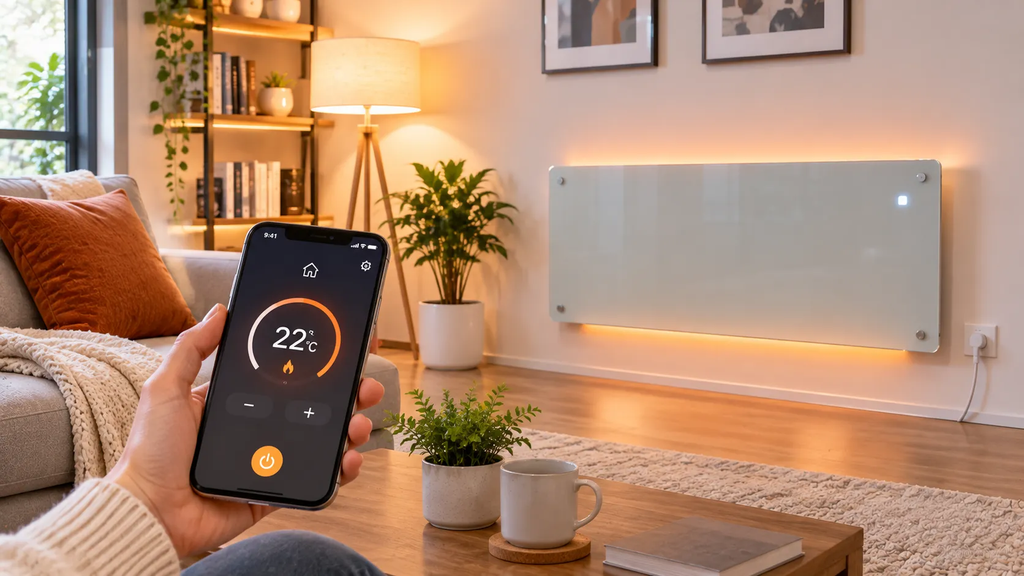
For years, heating was the least exciting part of a connected home. Lights learned to dim on voice command, speakers answered questions, and cameras sent alerts to phones, while the heater in the corner still had a plastic dial and a loud click. That is changing. Thermostats, timers, and sensors are moving into small heaters, and brands are building products that fit into the same app and routines as other home devices.
Part of this shift comes from factories that can deliver a custom-built OEM Glass Panel Convection Heater with touch controls and smart features under a retailer’s own name. Here is why heating is becoming a smart home category and what it means for buyers.
From Dial to Data
A traditional heater has one job: turn on and make heat. The user adjusts it by feel, and it keeps running until someone switches it off. A smart heater works with information. It measures room temperature, follows a schedule, and adjusts its output to hold a target. Some units log how long they run, so owners can see patterns.
This matters because heating is a large share of winter energy use in many homes. Even small improvements in control can make a difference to comfort and to the bill.
What Makes a Heater Smart
Not every feature earns the label. These are the ones that tend to matter most:
- Digital thermostat: Holds a set temperature more accurately than a basic dial
- Programmable timer: Starts and stops heating on a schedule
- Wi-Fi or Bluetooth control: Lets users change settings from a phone
- Voice assistant support: Adds hands free control in compatible homes
- Open window detection: Pauses heating when a sudden temperature drop is sensed
- Child lock: Prevents accidental changes to settings
A heater with two or three of these features already feels very different from an older model, and the price gap has narrowed as the components have become cheaper.
Heating by Room, Not by House
Central heating treats the house as one block. Smart heaters allow a different approach, where each room has its own settings. A bedroom can warm up half an hour before bedtime, a home office can heat during work hours, and an empty guest room can stay off.
This room by room control suits modern living. Many people work from home on some days and not others, and schedules vary from week to week. A phone app makes it easy to adjust without walking around the house.
Energy Awareness Becomes Part of the Experience
Energy prices have made people pay closer attention to usage. Smart heaters can support this by showing run times and helping users set sensible limits. Some apps let owners compare heating hours between days, which turns a vague sense of “we use a lot” into a clear picture.
Even without an app, simple features like an eco mode, a target temperature, and an automatic shutoff reduce waste. The principle is the same: heat only when it is needed, only where it is needed.
Glass Panel Design and Touch Controls
Design plays a larger role in smart products than in older appliances. Glass panel convection heaters are a good example. A flat tempered glass front gives a clean look that fits modern interiors, and it works well with a touch control area and a small display. There are no knobs to snag or collect dust, and the surface is easy to wipe clean.
The slim profile suits wall mounting too, which saves floor space and keeps the heater out of the way of children and pets. For many buyers, the heater is now something that should look good as well as work well.
Security and Privacy Cannot Be Ignored
Any device that connects to a home network carries some risk. A heater might seem harmless, but a poorly built connected product can become a weak point. Buyers should think about a few simple things:
- Does the maker provide software updates?
- Is the app from a known company with a clear privacy policy?
- Can the heater work normally if the Wi-Fi connection drops?
- Does the app ask for permissions it does not need?
A good rule is to keep smart devices on a separate guest network if the router allows it, and to use strong, unique passwords. A heater should always have physical safety protection, such as overheat and tip over cutoffs, that works independently of any app.
The Role of OEM Manufacturing
Many smart home products reach shelves through original equipment manufacturing. A factory builds the hardware to a brand’s design, and the brand adds its own name, app, packaging, and support. This model lets smaller companies launch connected products without building a factory.
For heaters, an OEM partner can adjust wattage, panel finish, control layout, plug type, and certifications to suit a target market. It also allows retailers to build a consistent range, with the same look and app experience across different sizes. Choosing the right partner is therefore a technology decision as much as a sourcing one.
What Buyers Should Check
Whether you are buying one heater for a bedroom or planning a product line, a short checklist helps:
- Safety marks that apply in your region
- Quality of the glass and the casing
- Accuracy and response of the thermostat
- App reliability and update policy
- Warranty length and who handles repairs
- Noise level, especially at night
Testing a sample before a larger purchase is always wise. Running it for several hours shows how it behaves in real use.
Keep Expectations Realistic
Smart features are helpful, but they do not replace good basics. A heater still needs to be the right size for the room, placed safely, and used with common sense. A connected heater in a drafty, uninsulated room will still struggle. Smart control works best when it supports a well chosen product, not when it is used to make up for a weak one.
Final Thoughts
Heating is joining the smart home because the technology has become affordable and the benefits are easy to see. Better control, room by room scheduling, and clearer energy use make winter more comfortable and less wasteful. As design improves and more brands enter the market, buyers will have more choice. The best results will come from choosing products with solid safety, honest software practices, and quality hardware underneath the screen.