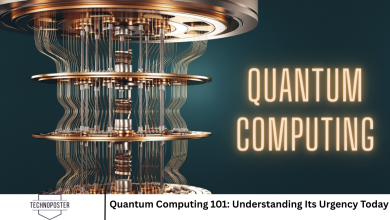
Europe’s first exascale supercomputer has produced a landmark result in quantum research. Using the JUPITER machine at the Jülich Supercomputing Centre, researchers working with NVIDIA have completed the largest comprehensive simulation of a fault-tolerant quantum computer to date — a 104-qubit system modelled in full classical detail.
Key points
The essentials from this report:
- Fault tolerance is the real subject
- The classical-quantum partnership
- Why simulate a quantum computer at all?
- What JUPITER is
Fault tolerance is the real subject
The headline is not the qubit count alone but the kind of system simulated: a fault-tolerant one, in which logical qubits are protected by error correction — the architecture any useful quantum computer must have. Simulating such a system comprehensively, including its error-correction overhead, gives designers a realistic map of what future hardware must achieve: physical qubit counts, error rates and runtimes, quantified rather than guessed.
The work was carried out at the Jülich Supercomputing Centre, with technical coverage in Nature‘s news reporting.
The classical-quantum partnership
Far from being rivals, classical and quantum computing are developing as complements. Supercomputers simulate and verify quantum systems; quantum processors may one day accelerate specific supercomputer workloads in chemistry and materials. The JUPITER result underlines the investment logic of nations building both: exascale machines are not a bet against quantum — they are the scaffolding quantum development stands on.
The bigger picture
Stories like this one rarely stay contained inside a single product or company. They ripple through supply chains, hiring plans and the roadmaps of competitors, and they change what customers expect as standard. Analysts who track the sector note that the pattern of the last decade has been consistent: a capability debuts as a premium differentiator, becomes a checkbox within two product cycles, and ends as an assumption. Readers evaluating the news for their own work should ask not only what changed, but how quickly the change becomes the baseline everyone else must meet.
Why simulate a quantum computer at all?
Quantum processors are notoriously difficult to validate. Their states cannot simply be inspected, and errors creep in from every direction — noise, decoherence, imperfect control. High-fidelity classical simulation lets researchers test error-correction schemes, benchmark algorithms and predict how a design will behave before scarce quantum hardware time is spent on it. As qubit counts climb, the classical cost explodes exponentially, which is precisely why an exascale machine was needed for 104 qubits.
For more coverage of the stories shaping the day, visit our home page and the latest in technology.
What JUPITER is
JUPITER, hosted at Forschungszentrum Jülich in Germany, is Europe’s first system to cross the exascale threshold — more than a quintillion calculations per second. Built around NVIDIA accelerated computing with a booster module of GPUs, it serves workloads from climate modelling to AI training. Its quantum simulation result is a deliberate flex: the machine class built for classical problems is now the reference platform for developing its quantum successors.
Why the timing matters
Context explains urgency. Technologies mature on their own schedules, but adoption bends around budgets, regulation and public trust — all three of which are in unusual flux at the moment. Organisations that moved early in previous waves tended to compound their advantage; those that waited for certainty usually paid more for less. None of that argues for recklessness. It argues for the unfashionable discipline of paying attention early, running small honest experiments, and knowing in advance what evidence would change your mind.
A simulation is not a quantum computer, and 104 simulated qubits solve no customer’s problem today. But the road to useful quantum machines runs through exactly this kind of verification — and Europe now owns one of the fastest stretches of that road.