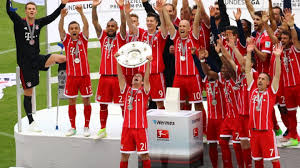
The 2016/17 Bundesliga season did not just repeat old patterns; several teams noticeably altered how they played, impacting tempo, pressing intensity, and how games developed. When you treat those tactical shifts as inputs to betting decisions rather than background colour, you turn stylistic change into a practical signal for adjusting how you evaluate odds, goal lines, and volatility from week to week.
Why Style Shifts Matter More Than Table Movement
League tables only show outcomes, not the mechanisms that produced them. Between 2015/16 and 2016/17, total goals per match moved only slightly — from 2.83 to 2.87 — yet underneath this stable average sat clubs whose playing identities changed sharply. Teams that increased pressing intensity or verticality generated more transition situations, altering their profile from low-event to high-event even when points totals improved only modestly.
From a betting perspective, those shifts affect where value might appear. A team that becomes more aggressive without bookmakers fully adjusting their totals or BTTS prices can create a window where goal-based markets lag behind new reality. Conversely, a side that tightens up defensively after a chaotic season may become a poor candidate for casually backing “over” on the assumption that “they’re always involved in high-scoring games.”
RB Leipzig’s 2016/17 Arrival as a High-Pressing Disruptor
RB Leipzig’s first Bundesliga season in 2016/17 is the clearest example of a new style entering the league. Analyses of that campaign highlight how Ralf Rangnick’s club embodied aggressive pressing and vertical transitions that had been developing in German football but gained sharper expression with Leipzig’s rise. Their 4–2–2–2 variant, intensive counter-pressing, and quick attacks through Timo Werner and others created high-tempo matches, including a 4–5 defeat to Bayern late in the season that showcased both attacking ambition and defensive vulnerability.
For bettors, Leipzig’s stylistic profile mattered more than their newcomer status. High press plus quick direct attacks tends to produce games with many turnovers in advanced areas, leading to more shots and higher xG counts per match. That, in turn, nudged their fixtures toward markets involving goals and both teams scoring, and it also made spreads tricky: a side that creates chaos can upset favourites but is also more prone to trading chances, so margin-of-victory markets required careful consideration instead of treating Leipzig as a typical newly promoted underdog.
Hoffenheim Under Nagelsmann: From Uncertain to Structured and Inventive
Hoffenheim provide a different, but just as important, stylistic shift. Julian Nagelsmann took over in 2015/16 and carried his ideas into 2016/17, with tactical analyses emphasising flexible back-three structures, intelligent use of wing-backs, and coordinated pressing traps rather than reactive survival play. Instead of sitting deep, Hoffenheim often pushed their lines high, used diagonal runs from wing-backs, and recycled possession with structure, moving away from the more passive approach that had left them threatened by relegation previously.
That evolution changed their betting profile. A side with clearer patterns on the ball and committed high pressing tends to produce more controlled but still chance-rich games, where both expected goals and shot counts rise on both ends. For bettors, this meant reclassifying Hoffenheim from “unreliable strugglers” to a team whose matches warranted serious attention for overs and BTTS in the right matchups, and whose ability to disrupt stronger opponents made them more attractive on handicaps than their historical reputation alone would suggest.
Bayern and Dortmund: Continuity at the Top, but With Tactical Nuance
Bayern Munich and Borussia Dortmund did not experience as radical a transformation as Leipzig or Hoffenheim, but the way they maintained elite attacking output reflects stylistic refinement rather than simple continuity. Bayern’s 2016/17 side continued to dominate possession and shot volume, recording 89 league goals from more than 600 shots, underscoring a controlled, territorial approach that allowed them to secure a fifth consecutive title with three games to spare.
Dortmund remained one of the league’s most attack-oriented teams, generating over 500 shots and more than 70 league goals, reflecting a commitment to high attacking volume and combinations around the box. From a betting angle, the nuance matters: Bayern’s control and squad depth made them a safer home favourite for win-related markets and modest handicaps, while Dortmund’s more open games, especially against high-tempo opponents, often lent themselves to goal-based markets rather than heavy spreads, since they conceded enough chances to keep matches lively and occasionally volatile.
Using a Simple Table to Summarise Style Signatures
To turn stylistic observations into something bettors can actually act on, it helps to condense key teams’ 2016/17 “signatures” into a quick reference. Looking at goals and shots helps approximate offensive intent and game state volatility.
| Team (2016/17) | Style Signal | Goals & Shot Profile (League) |
| Bayern Munich | Territorial control, high possession | 89 goals, 621 shots |
| Dortmund | High attacking volume, open games | 72 goals, 531 shots |
| Hoffenheim | Structured high press, wing-backs, flexible back three | 64 goals, 498 shots |
| RB Leipzig | Aggressive pressing, vertical transitions | High-tempo games, dramatic scorelines |
Interpreting this table in betting terms, Bayern’s profile suggests strong favourites with controlled blowouts; Dortmund and Hoffenheim point to frequent shot trading and goal potential; Leipzig stand out as a chaos generator where game state can flip quickly. Recognising these signatures allowed bettors in 2016/17 to categorise fixtures into “control,” “high-event,” or “transition-chaos” buckets, each linked to different markets and risk appetites.
Where UFABET Enters When Style Becomes a Betting Input
When a bettor begins to treat team style as a primary input rather than an afterthought, the way they interact with their betting environment shifts. Instead of starting from the interface, they start from tactical profiles — high-pressing Leipzig, structurally improved Hoffenheim, dominant Bayern — and then search for markets that reflect those patterns. In that scenario, engaging with a sports betting service such as ufa168 becomes less about browsing and more about execution: the user arrives with a specific idea (“this matchup of two high-tempo sides raises total goals volatility”) and looks for lines that match it. If the service’s layout helps them filter by team and market, see historical odds ranges, and place measured stakes accordingly, it reinforces disciplined use of style-based edges; if it mainly promotes unrelated high-variance specials, there is a risk that well-grounded tactical insights get diluted by impulse-driven slips that ignore the very stylistic work that made Bundesliga 2016/17 interesting from a betting perspective.
How Style Changes Affect In‑Play and Pre‑Match Reading
Clear stylistic changes influence both pre-match planning and live interpretation. With teams like Leipzig and Hoffenheim, the expectation of energetic pressing and quick attacks meant that early game-state events — an opponent struggling to build from the back or absorbing pressure poorly — carried extra weight. Bettors could anticipate that once these sides gained momentum, matches might become stretched, influencing the attractiveness of in-play overs or comeback markets when they fell behind.
Conversely, Bayern’s controlled style meant that even when scorelines were level at half-time, their territorial dominance often signalled a high probability of late goals in their favour, making certain live bets more appealing once the game narrative matched pre-season expectations. In both cases, recognising a team’s underlying style helped separate meaningful in‑play patterns from random fluctuations: pressure and shot counts in line with known tendencies were more trustworthy signals than isolated chances in teams that typically played risk-averse football.
Avoiding Overreaction to Short-Term Stylistic Noise
The danger in focusing on stylistic change is overreacting to a small sample of visually striking games. A single wild 4–5 or 5–0 does not prove a team has become permanently high-event; it may simply reflect match-up quirks, red cards, or end-of-season dynamics. Historical-data guidance stresses the importance of anchoring conclusions in larger samples and cross-checking them against underlying metrics like shots, xG proxies, and sustained tactical patterns across multiple opponents.
In practical terms, this means that bettors should look for consistency in how a team approaches both strong and weak opponents before treating a stylistic shift as stable. If Hoffenheim’s pressing only appears in occasional big games but disappears against lesser sides, the betting implications differ from a scenario where Nagelsmann’s structure holds across the schedule. A disciplined approach treats style change as a hypothesis to be updated over the season, not a label assigned after one memorable performance.
Linking Bundesliga Style Shifts to a casino online Mindset
People who learn to read playing styles and translate them into structured decisions sometimes carry that confidence into broader digital gambling spaces. In a casino online environment, however, many games lack the kind of repeatable, data-rich dynamics that make style analysis effective; they are governed by fixed house edges and independent outcomes. Recognising the difference matters: while a detailed understanding of Leipzig’s pressing or Hoffenheim’s positional play can legitimately refine match-related markets, assuming that the same analytical tools apply equally to every product in a casino online lobby risks overestimating one’s edge. The healthy transfer is not tactical specifics, but the discipline itself: hypothesis, data, testing, and restraint in the face of uncertainty.
Summary
Bundesliga 2016/17 contained several teams whose playing styles visibly shifted, and those changes carried measurable implications for how matches unfolded and how betting markets could be approached. Leipzig’s aggressive pressing and vertical attacks, Hoffenheim’s structured flexibility under Nagelsmann, and the continued attacking weight of Bayern and Dortmund collectively reshaped the league’s tactical landscape in ways that affected goal frequency, volatility, and in‑play dynamics. For bettors willing to treat style as a structured input — rather than as a vague aesthetic judgment — these shifts offered concrete signals on when to favour goals markets, when to respect control, and when to expect chaos, provided they resisted the urge to overreact to isolated thrillers and grounded their conclusions in sustained patterns.