The question of whether a lie detector can be fooled appears in legal debates, hiring discussions, internal investigations, and private conflicts. People ask it for different reasons. Some want to understand the limits of the method. Others want to know whether the result can be trusted at all. The short answer is that a polygraph is not an infallible machine, and in online discussions about its weak points, even unrelated search terms like ice fishing live casino can appear beside serious advice, which makes careful analysis even more important.
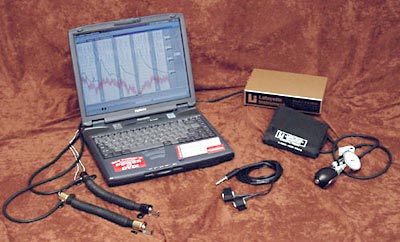
A lie detector does not read lies directly. It records physiological signals such as breathing, heart activity, and skin response while the subject answers questions. The examiner then interprets patterns in those signals. That means the core issue is not whether a person can “beat a machine” in a simple technical sense. The real issue is whether a person can alter the testing conditions, distort the recorded reactions, or create enough noise in the data to weaken the examiner’s conclusions.
How the Polygraph Works in Practice
To understand whether a lie detector can be fooled, it is necessary to understand what the test is trying to detect. The polygraph is based on the idea that deceptive answers may produce measurable physiological changes. These changes are not proof of deception on their own. They are treated as indicators that may suggest stress, cognitive strain, fear of exposure, or emotional conflict.
A standard examination usually includes several stages. There is a pre-test interview, a review of the issue being examined, explanation of the questions, the chart collection phase, and then an evaluation of the recorded data. The quality of the result depends on far more than the equipment. It also depends on question wording, the subject’s understanding of the test, the examiner’s training, and the subject’s physical and mental state during the session.
That structure matters because attempts to fool the test are rarely aimed only at the machine. They are often attempts to disrupt the broader method.
What People Mean by “Fooling” a Lie Detector
When people speak about fooling a lie detector, they usually mean one of three things. The first is producing a false negative, where a deceptive person appears truthful. The second is producing an inconclusive or unreadable result, where the data become difficult to interpret. The third is creating enough doubt that the examiner cannot make a firm conclusion.
These are not the same outcome. A person may fail to appear fully truthful but still avoid a clear negative result. In many cases, what some people call “beating the polygraph” is actually just making the test harder to interpret. That is a lower standard than proving that deception went undetected.
What Usually Does Not Work
Many popular ideas about beating a lie detector are simplistic. People often mention staying calm, rehearsing answers, controlling breathing, or mentally repeating a phrase to stay focused. On their own, these methods usually do not work reliably.
Staying calm is not enough because the examiner is not only looking for general nervousness. The analysis compares reactions across different questions. A subject may appear calm in overall behavior and still show measurable changes on specific items. Rehearsing answers also has limited value. A prepared answer can still produce physiological responses if the relevant question creates internal stress.
Controlled breathing is often discussed as a way to flatten reactions, but examiners are aware of abnormal breathing patterns. If the breathing trace appears manipulated, that itself may attract attention. The same is true for exaggerated stillness, unnatural pauses, or attempts to respond with overly uniform timing. These patterns may not prove deception, but they can signal deliberate interference.
Mental distraction techniques are also often overstated. Counting backward, focusing on a mental image, or trying to detach emotionally may help some people feel more stable, but there is no reason to assume that such tactics consistently eliminate measurable reactions. Human physiology is not that easy to regulate under pressure.
What May Affect the Test More Seriously
More disruptive countermeasures tend to be physical or procedural rather than purely mental. Discussions often mention pain induction, muscular tension, deliberate movement, sleep deprivation, medication, or attempts to alter emotional state before the exam. These methods are more serious because they may change the recorded data or reduce chart quality.
However, “more serious” does not mean “effective.” Physical countermeasures can be detected. Unusual movement, repeated muscle contractions, posture shifts, or irregular patterns may appear in the data or be observed directly. Examiners are trained to monitor for interference, and many testing conditions are designed to limit obvious manipulation.
Lack of sleep or the use of substances may also affect the exam, but not in a predictable way that benefits the subject. Fatigue can increase instability in responses. Medication may alter baseline physiology, but that does not automatically create a truthful-looking pattern. In some cases, the result may simply become inconclusive or the test may need to be postponed.
This is an important point: some methods may disturb the process, but disturbance is not the same as successful deception. It may only make the examination invalid, suspicious, or repeatable under different conditions.
Why No Countermeasure Is Universally Reliable
There is a reason no single method is recognized as a dependable way to fool a lie detector. The polygraph is not based on one signal alone. It looks at multiple physiological channels and compares responses across question types. A person trying to manage one reaction may fail to manage another. A tactic used at the wrong moment may create a pattern that looks more suspicious, not less.
Another problem is timing. Even if a person knows a countermeasure in theory, it must be applied consistently and at the correct point in the questioning sequence. That is difficult under examination conditions, especially when the subject does not fully know how the test is being structured or scored.
There is also the human factor. A trained examiner is not only reading data traces. The examiner is observing behavior, tracking consistency, and noting signs of artificial control. A person who enters the session focused on manipulation may create behavioral clues that weaken credibility before the recorded phase is even complete.
The Real Limit of the Polygraph
The strongest analytical conclusion is not that the lie detector is easy to fool. It is that the lie detector is limited even without successful countermeasures. Because the polygraph measures indirect signs rather than lies themselves, there is always room for error. A truthful person may react strongly. A deceptive person may react less than expected. Context, stress, personality, health, and examiner judgment all matter.
This means the bigger issue is not only whether a deceptive person can fool the test. It is whether decision-makers place too much trust in the result. That is why polygraph findings should not be treated as absolute proof. They are best understood as one source of information within a broader review that includes interviews, records, corroborating evidence, and factual investigation.
What Works and What Doesn’t: The Practical Conclusion
If the question is whether a lie detector can be fooled in every case by simple tricks, the answer is no. Most popular methods are unreliable, detectable, or misunderstood. Calm behavior, rehearsed responses, and mental exercises do not provide dependable control over the test. More disruptive methods may interfere with the process, but they often create suspicion rather than success.
If the question is whether the polygraph can ever produce a mistaken or uncertain result, the answer is yes. That possibility exists because the method is interpretive by nature. But that is different from saying that people can easily beat it with internet advice.
Conclusion
A lie detector can sometimes be affected by countermeasures, poor conditions, or human error, but there is no simple, consistent method that reliably fools it. What usually fails are the myths: just stay calm, just breathe differently, just memorize answers. What may have some effect often creates different risks, including detection, invalid charts, or inconclusive findings.
The most accurate view is that the polygraph is neither unbeatable nor easy to defeat. It is a limited assessment tool that can be influenced, challenged, and misunderstood. That is exactly why its results should be interpreted with caution and never treated as the sole basis for a major decision.