The e-commerce world has changed fast. Customers no longer shop from just one website on a desktop. They browse on mobile apps, discover products through social media, compare prices on marketplaces, and expect a smooth experience everywhere. That shift has pushed businesses to rethink how online stores are built.
This is where headless commerce comes in.
For brands that want speed, flexibility, and better customer experiences, headless architecture is becoming a serious advantage. Paired with a strong commerce engine, it gives businesses the power to build, scale, and adapt without being limited by traditional platforms.
Let’s break it down clearly.
What Is Headless Commerce?
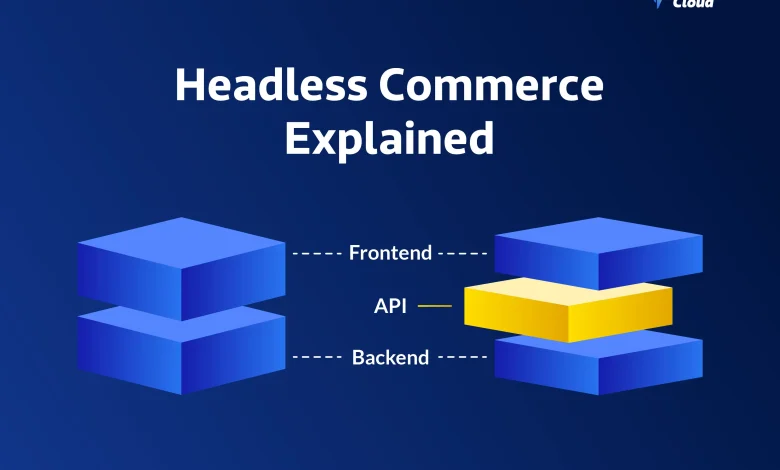
At its core, headless commerce is an e-commerce architecture where the front end and back end are separated.
In a traditional e-commerce setup, the customer-facing storefront and the behind-the-scenes commerce system are tightly connected. That means design, content, checkout, product data, and other functions all live inside one fixed platform. It works, but it can also be restrictive.
In a headless setup, the front end is “decoupled” from the back end. The storefront can be built however a brand wants, while the back-end commerce engine handles critical operations like inventory, cart, pricing, orders, and payments through APIs.
This separation allows brands to create unique digital experiences without disturbing the core commerce logic.
Why Traditional Commerce Platforms Feel Limiting
Many older e-commerce systems were designed for a simpler online shopping era. They were built mainly for websites, not for customers switching between apps, smart devices, social platforms, and marketplaces.
The problem is not that these systems stop working. The problem is that they become hard to scale creatively.
A business may want to launch faster pages, offer region-specific experiences, connect with an ecommerce marketplace, or create app-first shopping journeys. In traditional systems, every change can become slow, expensive, and technically frustrating.
That is why businesses, especially growing digital brands, are moving toward more flexible D2C e-commerce solutions that support rapid innovation.
How Headless Commerce Works
In headless commerce, the front end acts as the customer experience layer. This is what shoppers see and interact with, such as a website, app, kiosk, or even a smart device interface.
The back end acts as the operational layer. It manages product catalogs, promotions, customer data, payments, shipping logic, and order processing.
These two layers communicate through APIs.
So instead of forcing businesses to use a pre-built storefront tied to a platform, headless architecture lets teams choose the best tools for each part of the experience. Developers can build custom interfaces, while the business continues using a centralized commerce system underneath.
This makes it easier to create personalized journeys, launch new channels, and adapt to changing buyer behavior.
What Is a Commerce Engine?
A commerce engine is the system that powers the transactional side of digital commerce.
Think of it as the brain behind the buying journey. It handles core e-commerce functions such as:
Product information management
Pricing and discount rules
Cart operations
Checkout workflows
Inventory visibility
Order management
Payment integration
Promotions and tax logic
In modern setups, the commerce engine does not need to control how the storefront looks. Its main role is to ensure commerce runs smoothly and reliably across channels.
When businesses adopt headless commerce, the commerce engine becomes even more important because it acts as the stable foundation behind multiple customer touchpoints.
How Commerce Engine Powers Modern E-Commerce
Modern e-commerce is no longer about just launching a website and waiting for customers. Brands need to deliver connected experiences across channels while staying agile in a competitive market.
Here’s how a commerce engine supports that shift.
First, it allows consistency across platforms. A brand may sell through its own site, mobile app, social channel, and an ecommerce marketplace. The commerce engine ensures the same pricing rules, product data, stock levels, and order workflows remain aligned.
Second, it improves speed to market. Since the front end is separate, teams can redesign a website, test new experiences, or launch country-specific storefronts without rebuilding the entire commerce backend.
Third, it supports personalization. Businesses can tailor the front end based on customer behavior while relying on the same back-end engine for secure transactions and data handling.
Fourth, it makes scaling easier. As order volume grows or as new sales channels are added, the business is not boxed into a rigid platform structure.
This is why a powerful commerce engine sits at the heart of many advanced D2C e-commerce solutions today.
Why D2C Brands Prefer Headless Commerce
Direct-to-consumer brands need more control than ever. They want to own the customer relationship, tell a stronger brand story, and respond quickly to trends.
That is difficult when the storefront is stuck inside a template-heavy platform.
With headless commerce, D2C brands can build shopping experiences that actually reflect their identity. They can create faster landing pages, interactive product discovery, custom checkout flows, and rich content experiences without compromising backend stability.
This matters because modern customers expect more than a functional store. They expect a brand experience.
That is exactly why D2C e-commerce solutions increasingly rely on headless models. These solutions help brands combine storytelling, performance, and commerce in a way that feels natural across digital touchpoints.
Benefits of Headless Commerce for Businesses
The biggest benefit is flexibility. Brands are free to design the front end they want, not just the one their platform allows.
Another major benefit is performance. Since the storefront can be optimized independently, brands can build faster and more responsive experiences.
There is also better omnichannel readiness. A single commerce engine can support websites, apps, marketplaces, and emerging channels from one operational core.
Headless systems also future-proof a business. Technology changes quickly. A decoupled architecture makes it easier to adopt new tools or replace older ones without rebuilding everything.
For companies planning expansion, integration with an ecommerce marketplace becomes more manageable as the system is already designed for multi-channel communication.
Is Headless Commerce Right for Every Business?
Not always.
A very small business with simple needs may do fine with a traditional all-in-one e-commerce platform. Headless commerce usually makes more sense for brands that need customization, multi-channel growth, or stronger digital performance.
It is especially useful for businesses that:
Need custom user experiences
Operate across multiple selling channels
Want better integration flexibility
Plan to scale rapidly
Need advanced D2C e-commerce solutions
The decision depends on business goals, internal tech capability, and long-term digital strategy.
Final Thoughts
Headless commerce is not just a trend. It is a smarter way to build digital commerce for a world where customers interact with brands everywhere.
By separating the front end from the back end, businesses gain freedom to innovate. By relying on a strong commerce engine, they keep operations stable, scalable, and efficient.
What this really means is simple. Modern e-commerce needs both flexibility and control. A headless setup gives brands the flexibility to create better customer experiences, while the commerce engine provides the control needed to manage products, pricing, orders, and transactions across every channel.
For businesses exploring better D2C e-commerce solutions or looking to compete across their own platforms and every major ecommerce marketplace, headless commerce offers a practical path forward. It helps brands move faster, sell smarter, and stay ready for whatever the next wave of digital commerce brings.